
Uncategorized @en-gb
Isofix Car Seats for Newborns: Infant Seats, Rear-Facing and 360 Seats Explained
Nov
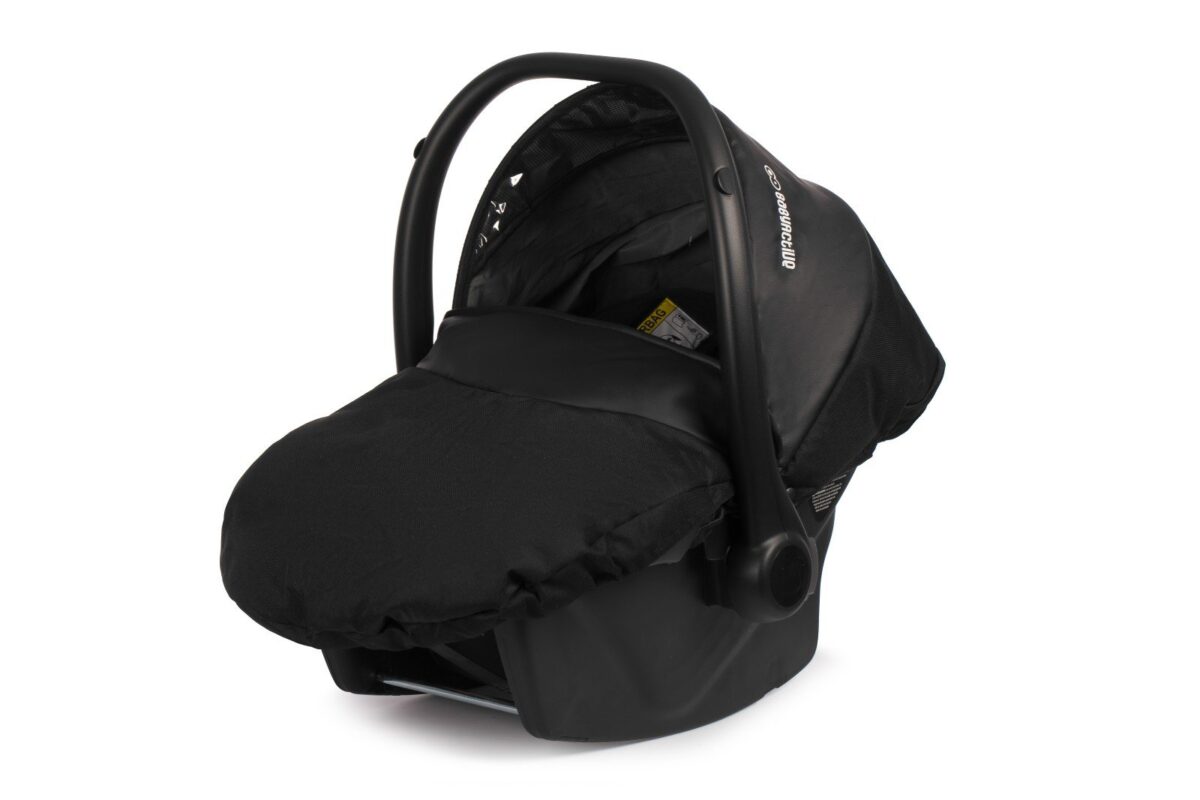
Short answer: an Isofix car seat clips onto two metal anchor points built into your car, rather than being held in by the adult seat belt. That makes it much harder to fit wrongly. For a newborn, the usual choice is a rear-facing infant carrier (often called a group 0+ or i-Size infant seat), fitted with Isofix through a base that stays in the car. Whatever you choose, it must carry a UK/EU approval label: R129 (i-Size) or the older ECE R44.
The main types of baby car seat
| Seat type | Direction | Typical stage | Fitting | Good for | Trade-offs |
|---|---|---|---|---|---|
| Infant carrier (group 0+ / i-Size infant) | Rear-facing only | Birth until baby reaches the seat’s height or weight limit | Seat belt, or Isofix via a base | Newborns; clicks onto many pram frames as a travel system | Outgrown in the first year or so |
| Base Isofix | n/a | Stays in the car | Isofix anchors plus a support leg or top tether | Quick, consistent fitting of an infant carrier | Only works with seats made for it; check your car’s compatibility list |
| 360 / swivel seat | Rear-facing, then forward-facing | Often birth to around 4 years (varies widely) | Usually Isofix | Lifting a baby in and out without twisting your back | Heavy, stays in the car, can’t go on a pram |
| Toddler seat (group 1 / i-Size toddler) | Rear- or forward-facing | After the infant carrier | Isofix or seat belt | The next stage after the infant seat | Not for newborns |
| High-back booster | Forward-facing | Older children | Car seat belt, sometimes Isofix connectors | Until 12 years or 135cm | Not for babies |
Isofix explained
Isofix is a standard pair of fixing points in the car, normally hidden between the seat back and the seat base. An Isofix seat or base locks onto them and then uses a third point, usually a support leg to the floor or a top tether behind the seat, to stop it rotating in a crash.
Most cars built in the last couple of decades have Isofix on at least the outer rear seats, but not every seat suits every car. Always check the car seat maker’s vehicle compatibility list for your exact make, model and year before you buy.
Rear-facing: why it matters
A baby’s head is large and heavy compared with their neck. Rear-facing seats spread crash forces across the back and head rather than throwing the head forwards. That’s why UK rules for R129 (i-Size) seats say your child must stay rear-facing until they are over 15 months old. Many parents keep children rear-facing for longer where their seat allows it.
Never fit a rear-facing seat in the front passenger seat if the front airbag is active. It’s illegal and dangerous. Turn the airbag off first, or better, use a rear seat.
360 car seats
A 360 (or swivel) seat rotates on its base so you can turn it towards the open door, put your baby in, then turn it back to rear-facing. Parents recovering from a caesarean, or anyone with a bad back, often find this helpful.
Honest trade-offs: 360 seats are heavy and stay in the car. They don’t clip onto a pram frame, so they don’t replace an infant carrier if you want a travel system. Some families use an infant carrier on the pram first, then a 360 seat once their baby moves to the next stage.
R129 (i-Size) vs R44: what the labels mean
- R129 / i-Size: the newer standard. Seats are chosen by your child’s height (in cm), include side-impact testing, and require rear-facing until over 15 months.
- ECE R44: the older standard. Seats are grouped by weight (for example, group 0+ is for babies up to 13kg).
Under GOV.UK rules, you can only use an EU-approved child car seat in the UK, and the label shows a capital “E” in a circle with “R129” or “ECE R44”. Both can be used legally if they’re approved and fitted correctly. Check the label on the seat itself, not just the box or listing. Our UK car seat law guide covers the full rules, including the 12 years or 135cm requirement.
Car seats that come with a pram
If you’re buying a pram anyway, a Sistema de viaje 3 en 1 includes an infant car seat that clicks onto the same frame, and a 4 en 1 usually adds an Isofix base for the car. That means you can move a sleeping baby from car to pushchair without unbuckling them.
When you compare travel systems, check these points on each product listing:
- Which approval the car seat carries (R129 or R44). Look for it in the specification.
- The car seat’s weight or height range.
- Whether an Isofix base is included or optional.
- Whether adapters for the frame are included.
Browse 3-in-1 travel systems with a car seat or 4-in-1 sets that include an Isofix base.
Pros and cons at a glance
Infant carrier on an Isofix base
- Pros: quick to fit the same way each time; carrier lifts out and clicks onto a pram.
- Cons: short lifespan; a base adds cost and only works with matching seats.
Infant carrier with seat belt only
- Pros: works in cars without Isofix and in taxis; nothing extra to buy.
- Cons: easier to fit incorrectly; takes longer each time.
360 seat
- Pros: easy loading; often lasts several stages.
- Cons: heavy, stays in one car, not part of a travel system.
Safety checklist
- Buy new or from someone you trust completely. A seat that has been in a crash may be damaged in ways you can’t see.
- Fit it exactly as the manual says, and check it’s tight every time.
- Harness straps should be snug, with no slack, and no bulky coats under the harness.
- Keep journeys with young babies short where you can and take breaks. Follow the time guidance in your seat’s manual.
- Don’t use the car seat as a place for your baby to sleep once you’re out of the car. The Lullaby Trust recommends moving them to a flat surface.
- Many retailers and some councils offer fitting checks, which are worth booking.
FAQ
Is Isofix safer than a seat belt fitting?
Isofix reduces fitting mistakes, which is a major cause of car seat problems. A belt-fitted seat that’s correctly installed is still legal and safe to use.
What’s the best car seat for a newborn?
The one that is approved (R129 or R44), fits your car and your baby, and that you can fit correctly every time. For most families that’s a rear-facing infant carrier, often on an Isofix base.
How long does a baby stay in an infant car seat?
Until they reach the seat’s maximum height or weight, or their head is level with the top of the shell. That’s often around their first birthday, but it varies by seat and baby.
Do I need a 360 car seat?
No. It’s a convenience feature, not a safety requirement.
Can I use a car seat from abroad?
Only if it carries the EU approval label (an “E” in a circle with R129 or ECE R44). US-approved seats without this label aren’t legal in the UK.
Sources
We used these sources when writing this guide:
- GOV.UK: Child car seats – the law
- The Lullaby Trust: car seats and safer sleep
- RoSPA Child Car Seats: choosing and fitting a seat

 English
 French
 German
 Spanish
 Italian
 Polish
 Romanian
 Dutch
 Greek
 Czech
 Portuguese
 Swedish
 Hungarian